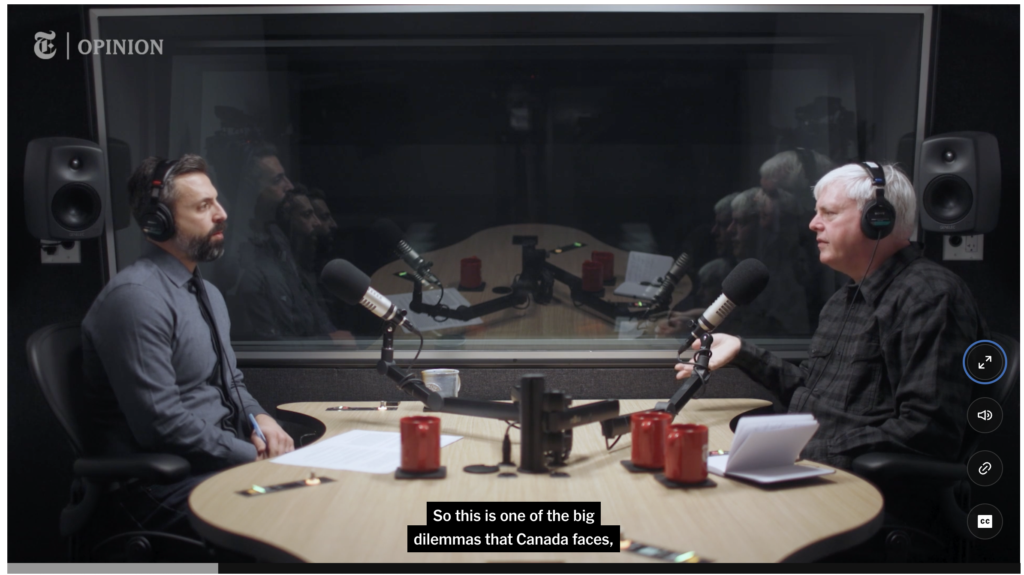
The Most Important Foreign Policy Speech in Years

A Conversation with Ezra Klein.

“Beneath Carney’s analysis of what is happening is an idea I’ve been following for some time: weaponized interdependence. This idea comes from the international-relations theorists and professors Henry Farrell and Abraham Newman in their book “Underground Empire: How America Weaponized the World Economy.” The basic concept is that over time, in this globalized, woven-together world, there are a lot of ways in which being on American technologies and in American financial markets gave the United States leverage. This system was fine for our allies and for the world, as long as we didn’t use that leverage too much. But now we’ve begun to make that a way we can harm them, a way we can extort them, a way we can control them, and that has really changed the nature of the bargain.”

More at The New York Times.

Other Writing:

Academic Article

New Problems, New Publics? Dewey and New Media

This is a response to the article by Ethan Zuckerman “New Media, New Civics?” published in this issue of Policy & Internet (2014: vol. 6, issue 2). Dissatisfaction with existing governments, a broad shift to “post-representative democracy” and the rise of participatory media are leading toward the visibility of different forms of civic participation. Zuckerman’s ...
Read Article
Academic Article

The Consequences of the Internet for Politics

Political scientists are only now beginning to come to terms with the importance of the Internet to politics. The most promising way to study the Internet is to look at the role that causal mechanisms such as the lowering of transaction costs, homophilous sorting, and preference falsification play in intermediating between specific aspects of the ...
Read Article