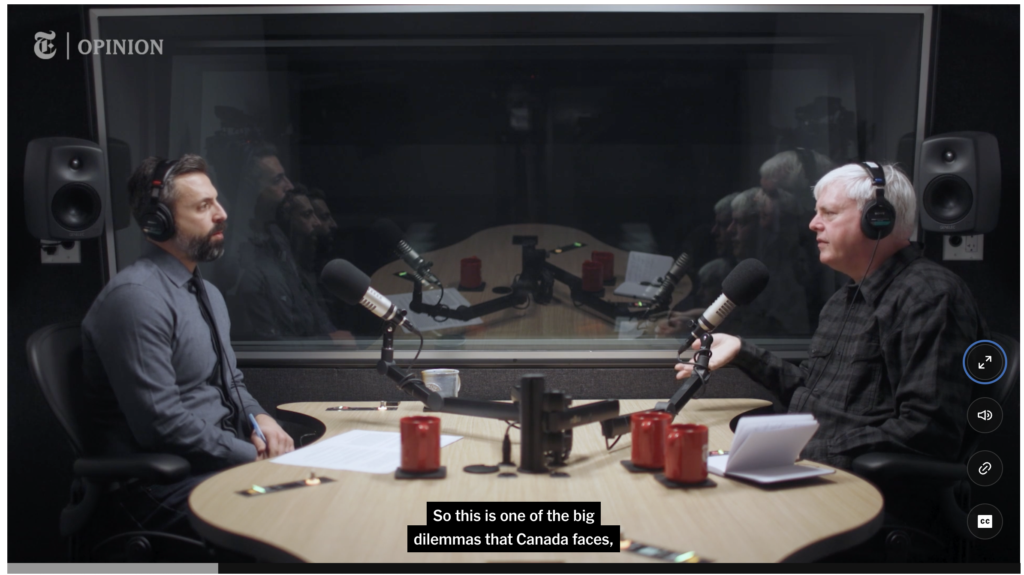
The Most Important Foreign Policy Speech in Years

A Conversation with Ezra Klein.

“Beneath Carney’s analysis of what is happening is an idea I’ve been following for some time: weaponized interdependence. This idea comes from the international-relations theorists and professors Henry Farrell and Abraham Newman in their book “Underground Empire: How America Weaponized the World Economy.” The basic concept is that over time, in this globalized, woven-together world, there are a lot of ways in which being on American technologies and in American financial markets gave the United States leverage. This system was fine for our allies and for the world, as long as we didn’t use that leverage too much. But now we’ve begun to make that a way we can harm them, a way we can extort them, a way we can control them, and that has really changed the nature of the bargain.”

More at The New York Times.

Other Writing:

Chapter in an Edited Volume

The Invisible Transformation of the Co-decision Procedure: Problems of Democratic Legitimacy, Institutional Challenges in Post-Constitutional Europe: Governing Change eds. Catherine Moury and Luis de Sousa – with Adrienne Hèritier

The relationship between Council and Parliament within the codecision procedure involves a plethora of informal and semi-formal meetings in which many of the real decisions about legislation are taken, with little scope for public oversight. In the light of the current debate on the future of European Union, the report will address the question what ...
Read Article
Essay

The Modern History of Economic Sanctions

Nicholas Mulder’s new book, “The Economic Weapon: The Rise of Sanctions as a Tool of Modern War,” remakes debates over European history between the two world wars. It rescues the League of Nations from the enormous condescension of posterity, arguing that the league was neither ridiculous nor doomed. However, it also demonstrates that the league’s ...
Read Article