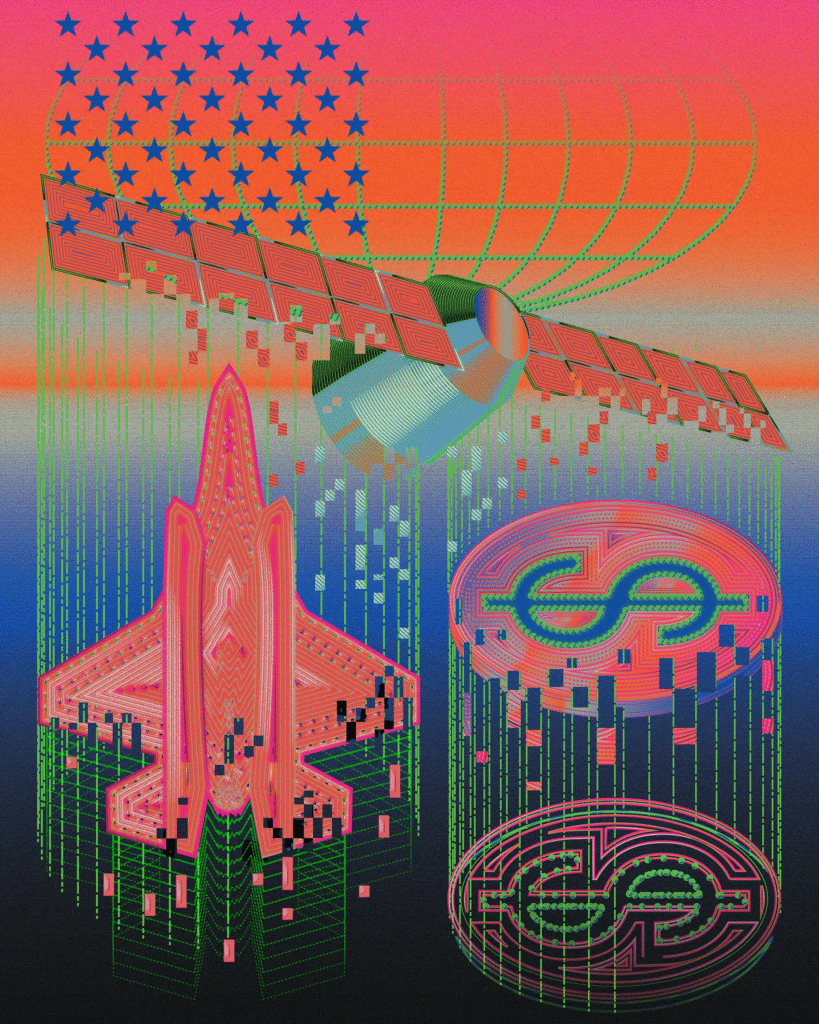
Back in 2022, Cory Doctorow coined the term “enshittification” to describe a cycle that has played out again and again in the online economy. Entrepreneurs start off making high-minded promises to get new users to try their platforms. But once users, vendors, and advertisers have been locked in—by network effects, insurmountable collective action problems, high switching costs—the tactics change. The platform owners start squeezing their users for everything they can get, even as the platform fills with ever more low-quality slop. Then they start squeezing vendors and advertisers too.
People don’t usually think of military hardware, the US dollar, and satellite constellations as platforms. But that’s what they are. When American allies buy advanced military technologies such as F-35 fighter jets, they’re getting not just a plane but the associated suite of communications technologies, parts supply, and technological support. When businesses engage in global finance and trade, they regularly route their transactions through a platform called the dollar clearing system, administered by just a handful of US-regulated institutions. And when nations need to establish internet connectivity in hard-to-reach places, chances are they’ll rely on a constellation of satellites—Starlink—run by a single company with deep ties to the American state, Elon Musk’s SpaceX. As with Facebook and Amazon, American hegemony is sustained by network logic, which makes all these platforms difficult and expensive to break away from.